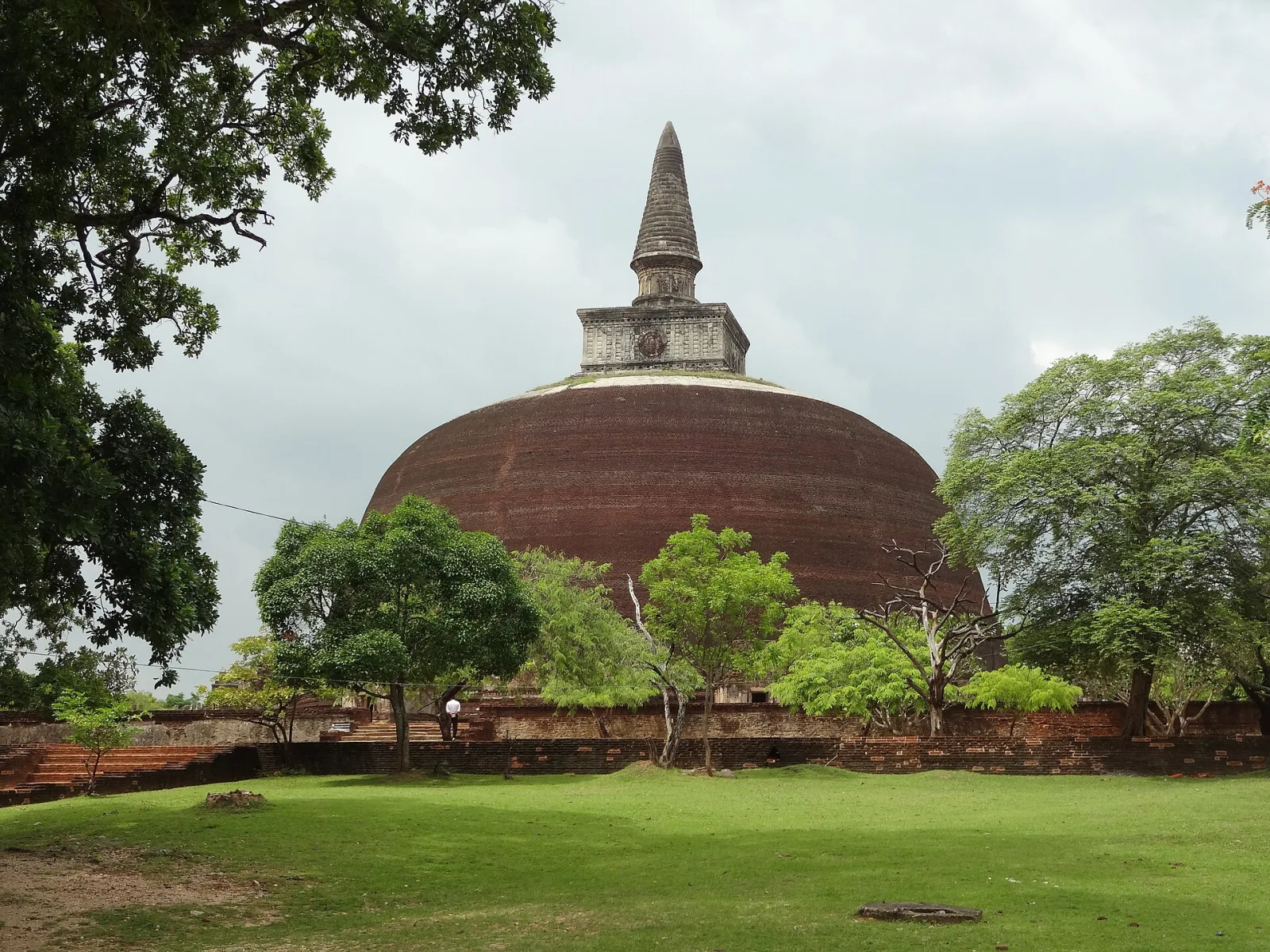
The largest stupa at Polonnaruwa, built under Nissanka Malla in the late twelfth century and deliberately modelled on the great Anuradhapura dagobas.
The imitation was political as much as religious: Nissanka Malla was an outsider to the ruling line, and building in the older capital's idiom asserted continuity with it. His reign also produced the inscriptions in which the word Govigama first appears.1